The Grapefruit Box
Letters to Someone Who No Longer Exists

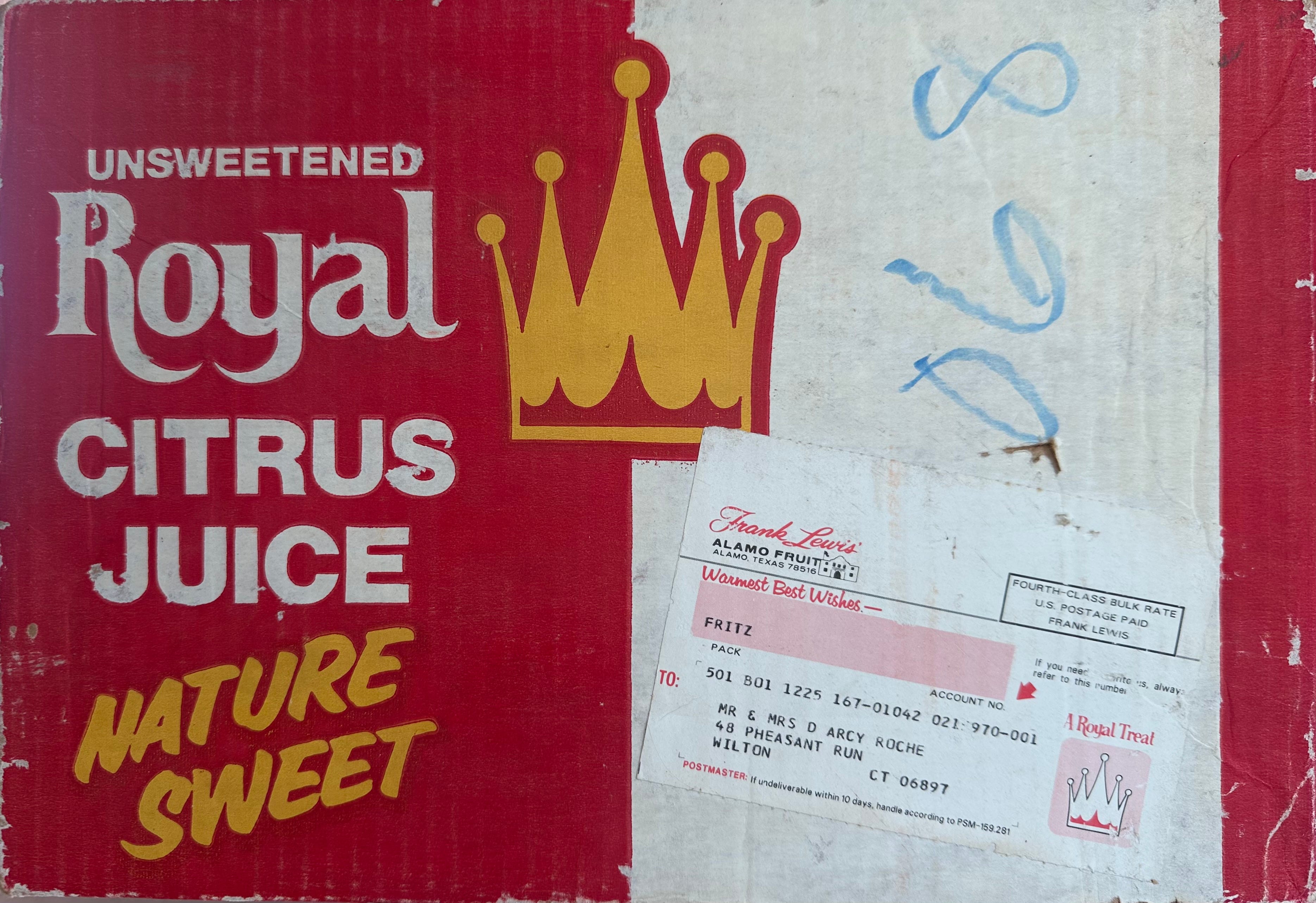
I have a box of letters in an old grapefruit box addressed to someone who no longer exists.
We used to sit the dog of a family friend each year, “Fritz,” an easily aroused Yorkshire terrier whom we brothers eagerly welcomed into our petless home. For two weeks during the holidays, Fritz would live with us, and the rest of the year was for swimming. Pets were a distraction, and, as my Mom said, “Pets die, and I don’t want to deal with that.”
I wrecked a car and briefly owned a motorcycle. I got knocked out in a bar fight in Danbury. I loved my friends.
Fritz’s owners, as we used to call an animal caregiver, would send us a box of grapefruits as a thank-you gift for watching him, pink grapefruit dripping extravagantly in a time of apples and canned fruit. I can still recall the brightness of the fruit against the grey branches of winter’s shadow.
The label on the box still says “Fritz,” a dot-matrix memorial to a companion, like the New England winter, that is no longer. No elaboration or punctuation, just “Fritz,” a box checked in a holiday ritual that we imagined might continue indefinitely, coupled with the exuberance of “NATURE SWEET”, fourth-class postage, and ruby-red sturdiness.
The box is usually in the attic, where we place precious items we will never need again. The basement is used for things we will discard before they become a burden on our children. The attic is well-lit and dry, with pools of sap from timbers used too soon that will become amber. The box lies between a pedal-less bike awaiting a child to say “mine!” and a bin of photos and their negatives.
The box contains graduation announcements, a certificate recognizing an essay on Shakespeare, I have wasted time, and now doth time waste me, and an old clipping from the local paper recognizing two brothers who read 30 books over a summer, smiling with their reward of folio-sized coloring books that were never colored in. We were readers.
In the eighties, while I was in High School, my father left his job of 25 years and relocated to Pennsylvania. I stayed in my hometown to finish high school, first at home with my brothers and a half-time Mom, broiling chickens for dinner, then hosted by friends’ parents. We drove to school in a green Datsun 710. I wrecked a car and briefly owned a motorcycle. I got knocked out in a bar fight in Danbury. I loved my friends. I got into Yale. Then Oxford.
At Oxford, there were no classes, and lectures were optional. Writing was not. Eight hours a day in a round library where books were summoned with a whisper. I read Irish playwrights and American postmodern novelists—Juno and the Paycock, the hedge schools of Friel’s Translations, the raw failure of The Naked and the Dead. Reading without recall yet unforgettable.
I wrote to write, not to achieve or perform, but because writing was how I wrote myself into existence.
That was the last year I lived that way.
The grapefruit box holds that life, and the box contains letters, ordinary delights.
There is one from my Grandmother, Lillian, that was sent to me at school in England. Lillian lived in Rochester, a town suggesting the anglican countryside of Mr. D’arcy, but realized in the brick and grey of upstate New York’s waning factory days. The letter is in the tissue-blue of airmail, a self-contained ritual. Like Poe’s Purloined Letter, which was concealed by its own transformation, this message was written on the inside surface of the envelope, a private text hidden in the open. Telegrams were the haiku of long-distance communication. Airmail offered the languor of a full-sized letter foldable into 7 ¼” by 3 9/16” with the red and white livery of the barber–or perhaps the surgeon.
On the origami surface of what the Europeans called an aerogramme, my Grandmother wrote the longest message I ever received from her: a thank-you for hosting her in England, a reminder of how proud she was, and seven inches of news from Irondequoit. I remember her visit because it was the first time I had seen my grandfather smile at me—just me—in the granite arcades, acknowledging me for the first time at age 80 and approving of what he saw. We drove the streets of London, shifting with the wrong hand. He died two years later.
There is no letter from my parents.
There are also no letters to friends about my Annus Mirabilis, where I began to understand why one writes, because that was my secret.
I did write to friends back home, in their own quads, about rowing an eight one afternoon with seven large friends and one tiny, down the Thames—or it could have been the Cherwell—to a pub on the river with a small dock called the Bear or the Eagle, a winding adventure in the cool light of springtime rowed clean out and dangerously home. I wrote about Pimm’s cups, the British spiked fruit punch that unbound propriety.
That winter I told a story of a foggy night when I was walking the silent weeknight streets, when I heard thin strains of music that I followed as it became the dum-ta-dah of “Orinoco Flow,” and I followed beneath the gargoyles to a typical quadrangle of untouchable lawn, then to a window on the third floor where one of my best school friends lived. Some sirens are kind.
I did not write about my writing.
Some of the letters were from high school friends, including one friend whose exuberant writing angled up the page, recalling times we had spent together, and courteously added “Ha!” in non-ironic exclamation. These letters were always answered with a pun and a memory, our currency of connection. The memories remain.
There are a few notes from high school, when writing was the call-and-response of nothings: “I saw you in the hall today,” or “Sneak out after French class.” I can no longer remember how these messages were delivered, nor why they were saved in the museum of passing moments. There is even a small drawing in a frame, composed of tiny letters, that tells the story of a friendship—a precise narrative of seeing and being seen.
The last letters come in sturdy envelopes from New Jersey and Philadelphia, from John and Peter, classmates in England, back in the states, each remembering Juxon Street and the local pub. John would put on his fake Elvis hair and sing “In the Ghetto,” while Peter would shake his head. We were kings—a family unit in an International Style apartment block, friends for life, at least for three English school terms.
In the letters, Peter and John retell our stories. It is good to have those stories.
There are no letters from my British friends, but I imagine them as barristers and professors, perhaps one of them works in London’s Gherkin. I travel to London, but I do not look them up. They were the entire world, with John and Peter and my high school friends, loosely held together by the night at the pub, a warm evening on the quad, and biking along the Thames on a bike not worth stealing. They were separate from O’Casey, Synge, and Friel, who were mine.
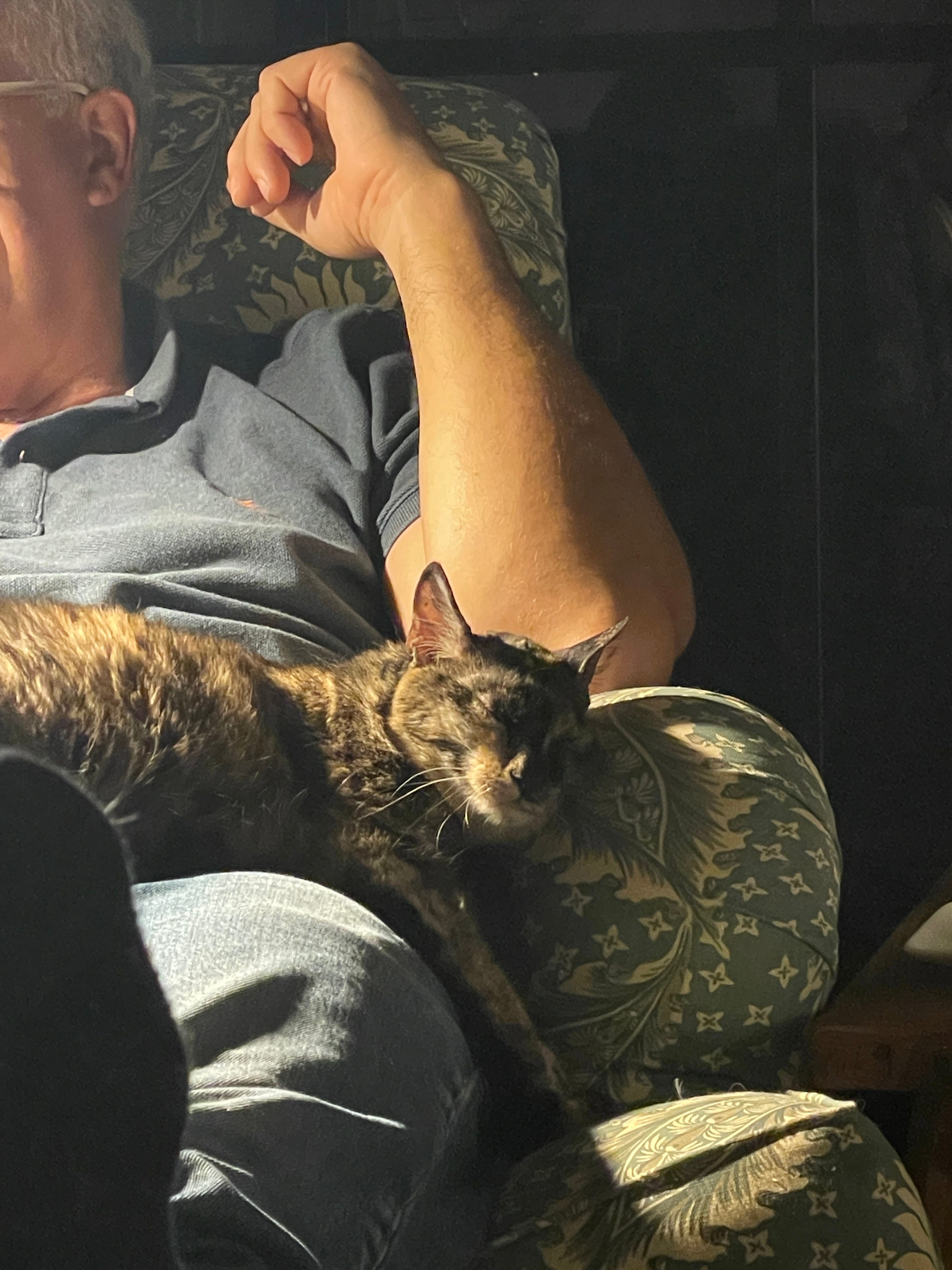
The box is open. The Fall light dims, and I can still read the address of my childhood home on the label of the box. I unfold each letter, a cat sleeping on my chest, as a brief kindness to someone who once existed.
But I also write to correspond with him, to tell him I remember, I was there, I participated, that I loved those plays, and that I have read and thought so much more since. He knows my old friends, and I suspect he will like most of the new ones.