Boycotts Don't Work...Quickly
Is a national commerce blackout a useful effort? Will it work?

I did not shop today, and though my piddling daily expenditures won’t stop Napoleon’s armies, perhaps the brief conversations today will create connections that persist (and resist).
Today, Friday, February 28, is Economic Blackout Day, a widespread protest launched by The People’s Union and supported by numerous faith and advocacy groups. According to the web site, the rules are:
Do not make any purchases
Do not shop online, or in-store
No Amazon, No Walmart, No Best Buy Nowhere!
Do not spend money on:
Fast Food
Gas
Major Retailers
Do not use Credit or Debit Cards for non-essential spending
Why? Per the site: “Corporations and banks only care about their bottom line. If we disrupt the economy for just ONE day, it sends a powerful message.” Interestingly, they don’t articulate the message.
It won’t work. And it might.
It won’t work because the economy and the forces underlying it are massive. The bankruptcy of Joann’s announced today will likely have a more significant economic impact than the boycott.
If 15% of the US population participates in the blackout, it will be an incredible act of spontaneous social mobilization, yet it won’t be significant. Some portion of the population will spend a little more as a counter-protest, and Amazon and the banks won’t even notice.
The media, predictably, will mention it today and forget it tomorrow. They are not going to be the clarions of depleted consumption. The statisticians and economists will declare it a non-event
The level of organizing required to change the system is staggering under normal circumstances, and these are not normal circumstances. Enormous power is concentrated in the hands of men that have near-infinite resources and absolute resolve. They know that they can wait out any economic resistance because they know that we have no choice. Eventually we have to eat and buy clothes, and we need our dancing monkeys, so we’ll be back streaming faster than you can say “Money Heist.”
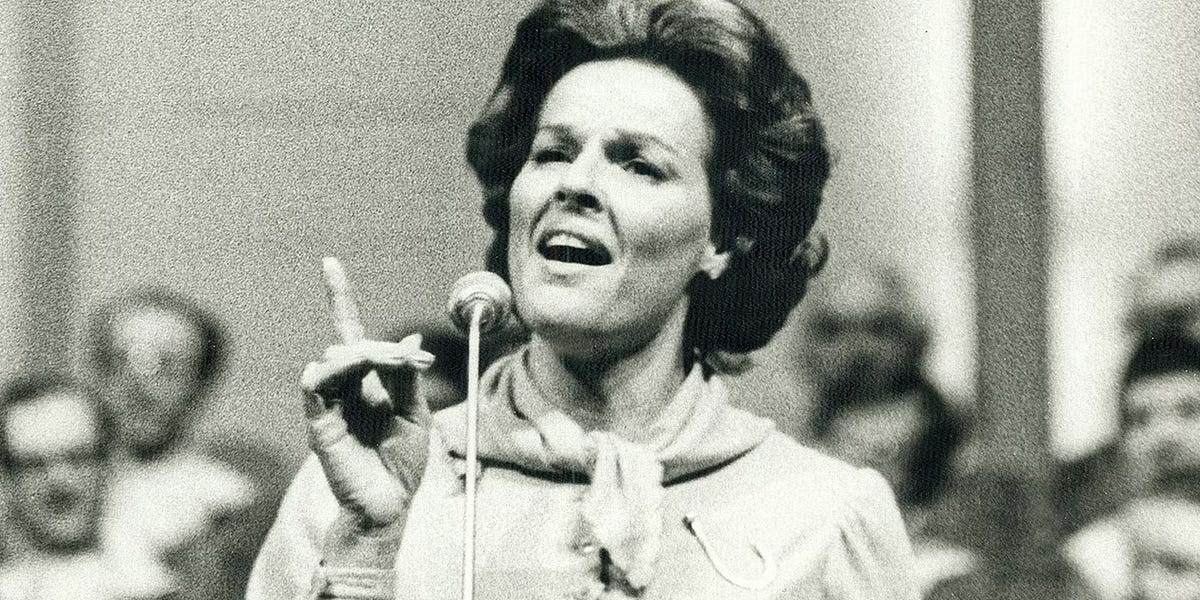
It won’t work because, statistically, it never works. You can count on two fingers the truly successful us boycotts. The orange juice “Gaycott” of 1977 had the staggering effect of Anita Bryant, a truly horrendous human, losing her job. Not the stuff of brass plaques and granite pedestals.
It might work because protest is not instrumental, nor are they transactional. We live in a world where only that which is instrumental exists, here meaning that which has a clear market value. And value can only be expressed transactionally - if a book doesn’t sell, it is a shit book, and if an influencer makes money, they are a representative of the collective unconscious, the zeitgeist. This is the lens of the economist, the financial reporter, and the chattering class: only that to which we can attach a price has value.
By those rules, the only real success would be the collapse of an asset class. If a protest annihilated Bitcoin, that would be real. If it made someone wealthy, it would be a victory. But in this world, nothing that is not measurable in money can impact anything.
It might work because though it appears to be about money, about making “the man” feel the pain in his portfolio (the only place he feels anything), it really is about connection. A boycott seems so transparently about the transactional heart of our society that it feels impossible to judge it by any measure than unswiped credit cards (untapped?). But that is a grave misinterpretation.
When a group takes collective action, they may achieve the direct goal, but it is so rare that it often takes the leaders by complete surprise when it does. What a successful action does is change language and, more importantly, anneal that language on a network of participants. The sorry consumers of the day before are the rebel alliance, making common cause. The participants were the fish that stopped swimming for a moment and asked a bunch of probing questions about the water they just noticed and can never un-notice.
“Can I go to my local grocery store if it isn’t a big corporation?” was asked on a chat group I saw. “Try not to, but use cash if you do so VISA doesn’t make money.” In a two-phrase exchange, each participant became momentarily aware of the extractive tax of global payments and the distinction between local and big corporate. Moreover, they became aware *together*
They used to say that America and England were one country separated by a common language. We are one society drowning in a language that can only accommodate thinking that is extractive and exploitative, that privileges wealth over dignity, performative cruelty over decency. Creating a new language, or at least opening a permissive space for words we have forgotten how to use, creates a new way to relate, hopefully a bit less cruel.
That is what happened after the Gaycott. The LGBTQ movement built and grew through many stages, but that boycott was an important milestone.
I did not shop today, and though my piddling daily expenditures won’t stop Napoleon’s armies, perhaps the brief conversations today will create connections that persist (and resist).